
Field work season has concluded
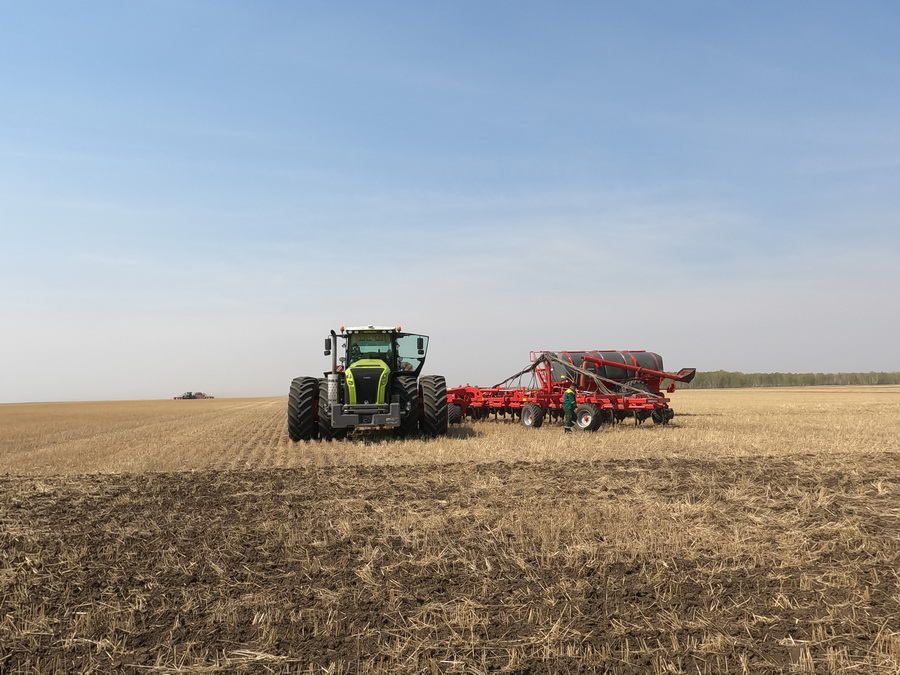
Agricultural producers in the Timiryazevsky District have completed their autumn field operations. What steps are local farms taking to improve agricultural technologies and upgrade their equipment? How are they managing the sale of their produce, and what state support is available to them? It is worth noting that this year’s harvest in the district is in line with the average figures from recent years—a solid result, all things considered. During July and August, the region experienced an unusually intense heatwave, which created significant challenges for farmers. However, skilled and experienced agriculturalists know how to counter the whims of nature; the key lies in modern agricultural practices. This includes moisture conservation, the use of high-quality, regionally adapted seeds, investment in high-performance machinery, and the timely execution of all field operations. How have these farmers navigated the current season, and what tasks lie ahead for them?
Sagat SK LLP grows wheat, barley, rapeseed, and sunflowers. The company consistently achieves crop yields that are on par with or above the district average; this year, its performance is once again among the best in the district. These strong yields are the result of sound agricultural practices and modern technical equipment. Anatoly Pavlovich Lyapkalo, the head of the enterprise, discusses the harvest results and the outcomes of the current agricultural year, before concluding the conversation by touching upon the present and future concerns of those who work the land.
"The past agricultural year was a difficult one," says A. Lyapkalo. "Grain yields were slightly higher than last year, with a harvest of 20.5 centners of wheat and barley per hectare. Rapeseed suffered significantly during the dry summer, as did sunflowers, though to a lesser extent. We completed sowing without delays, within the optimal agrotechnical timeframes, and all types of field work were carried out in full throughout the summer. High-performance machinery was used for the harvest, including two new Claas Trion combine harvesters. For the past few years, we have been upgrading a portion of our agricultural equipment annually. Our team of machine operators consists primarily of experienced specialists, many of whom have been working with this machinery for 10–15 years or more. Thanks to our solid technical resources, we are able to perform all field operations to a high standard and within the best possible timeframes. We also place great emphasis on crop variety rotation, selecting varieties that are well-adapted to local conditions and drought-resistant."
- What operations were carried out after the harvest, and how are the harvested products stored and sold?
We have carried out deep soil tillage using flat-cutters and disked the sunflower stubble. We are storing the grain in warehouses and in storage bags; we are in no rush to sell, as we are waiting for better prices.
Tell us about the state support the farm receives, as well as the challenges it faces and its plans for the near future.
- There are many forms of state support available: we receive investment subsidies for new agricultural machinery, as well as subsidies for fertilizers and herbicides, and we purchase fuel and lubricants at a discounted rate. Even so, diesel fuel remains very expensive; costs for it are rising, while grain prices are roughly the same as they were a year or two ago. We also make use of an effective credit program called "Kendala-2." Looking ahead, our goals are to improve our agricultural technologies, continue upgrading our equipment, and achieve higher crop yields.
Виктор Крыгин.


