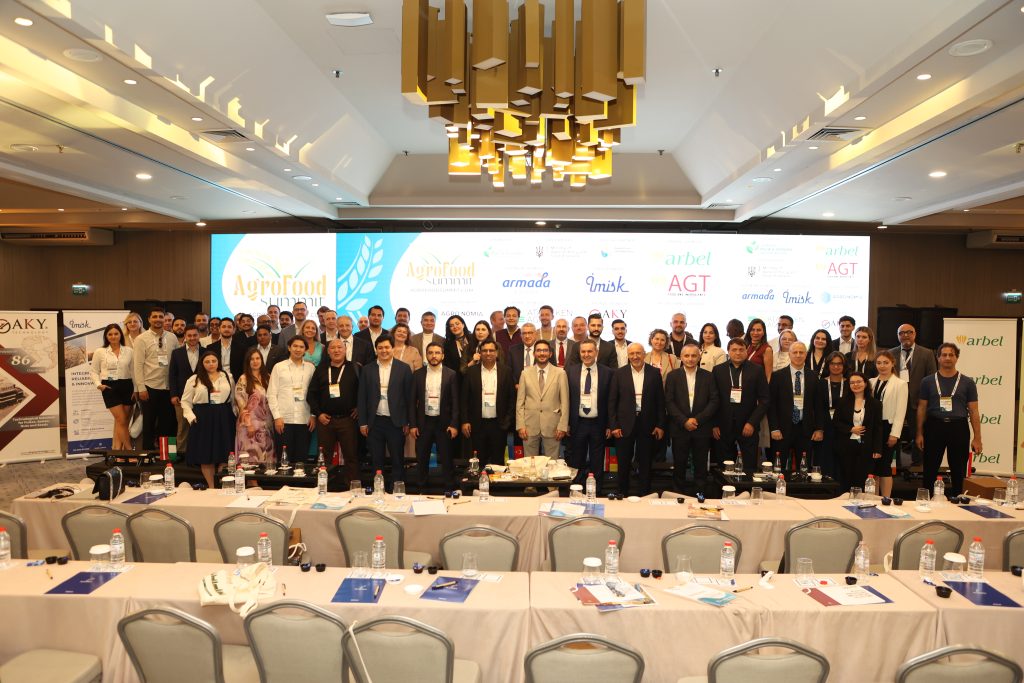
On September 24–25, 2026, AgroFoodSummit 2026 was held in Mersin, Türkiye, bringing together representatives of the global agricultural and food industries.
The event was organized by the Ukraine Pulse and Soybean Association in partnership with the Global Pulse Confederation (GPC). The Summit brought together producers, traders, processors, logistics companies, investors, and industry experts from Türkiye, Ukraine, Kazakhstan, and other countries.
Mersin was selected as the host city due to its strategic importance for international agricultural trade. Located on the Mediterranean coast, the city is one of the region’s major logistics hubs, connecting trade routes between the Black Sea region, the Middle East, Africa, Asia, and the Mediterranean. Its port infrastructure, free trade zone, and developed processing sector play an important role in regional agricultural commodity flows.
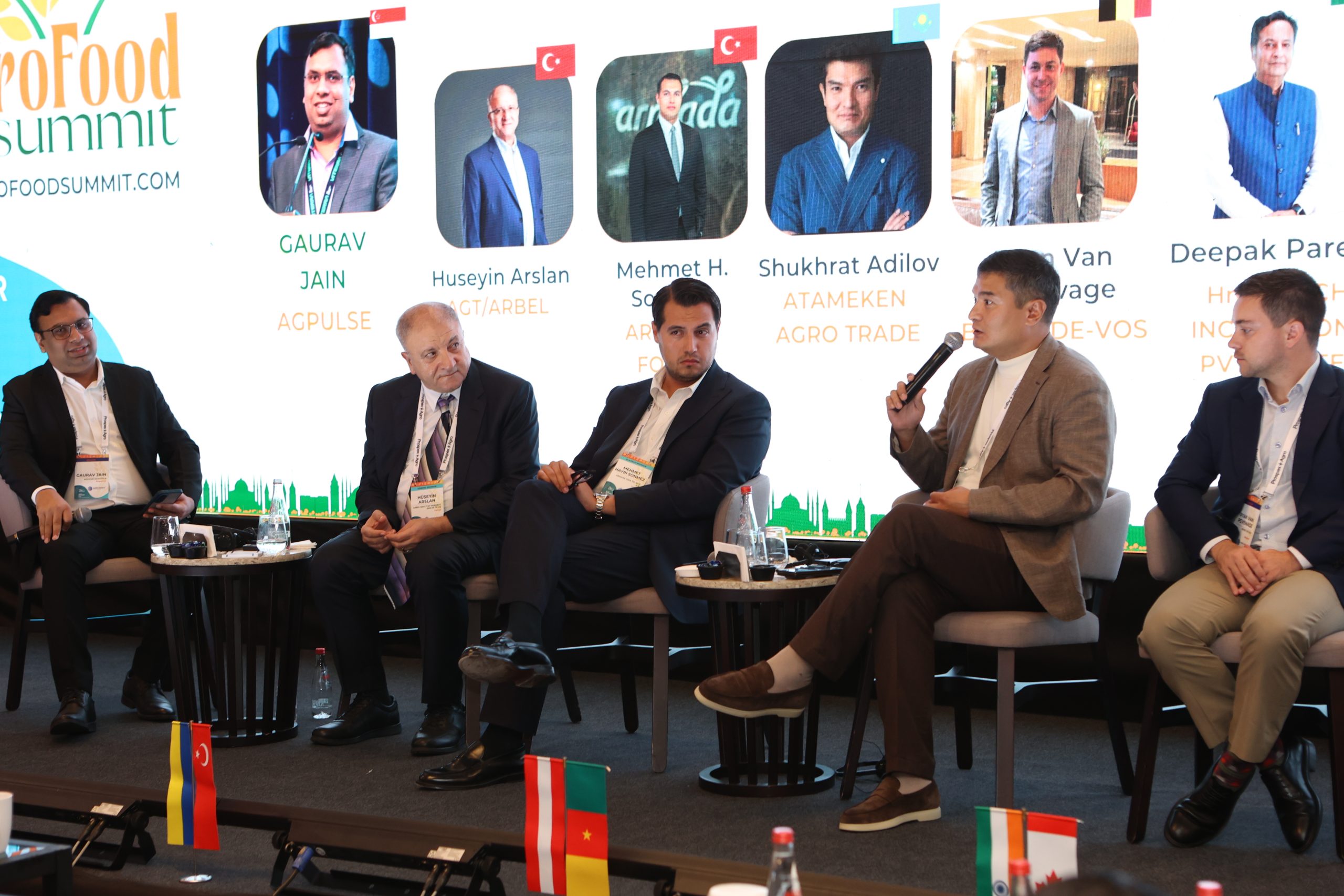
Shukhrat Adilov, Director of Atameken-Agro Trade, represented the company at the Summit and participated in the panel discussion “Global Pulses Market: Supply & Demand.”
The panel brought together representatives of the agricultural sector from Ukraine, Türkiye, Kazakhstan, Singapore, Pakistan, Belgium, and India.
Among the participants were Mehmet H. Sonmez, CEO of Armada Foods; Huseyin Arslan, Executive Chairman and GPC representative at AGT Arbel; Ryan Van Penevage, Senior Trader at Braet-De-Vos; Deepak Pareek, Founder and Managing Director of HnyB Tech-Incubations Pvt. Limited; Mahesh Raja Manglani, Commercial Director at MastQalander; and Onur Vatan, Director at Agro-Nomia.
The discussion focused on the current balance of supply and demand in the global pulses market, production forecasts, changes in import demand, logistics, and the transformation of international trade flows.
The global pulses market is entering the new season under varying production and demand conditions.
In several countries, harvest expectations have declined, while major consuming markets continue to depend on imports. At the same time, weather conditions, logistics constraints, geopolitical developments, and changing consumer demand are reshaping traditional trade routes.
South and East Asia remain particularly important for the global pulses market.
In India, pulse production is expected to remain below targeted levels, supporting the country’s demand for imported commodities.
Pakistan also remains structurally dependent on imports. The country consumes more than 700,000 tonnes of chickpeas annually, while domestic production is estimated at approximately 300,000–350,000 tonnes. Import demand also remains significant for lentils and yellow peas.
China represents another major market. Domestic pea production is estimated at up to 1.5 million tonnes, while consumption reaches approximately 3.4 million tonnes. At the same time, global pea production in the 2026/27 marketing year is expected to decline, which could further affect international supply and trade flows.
Kazakhstan remains an important producer and exporter of pulses in Central Asia.
Although lentil acreage has decreased, opportunities remain to increase exports of other pulse crops. At the same time, further expansion in international markets depends heavily on the development of efficient logistics.
For Kazakhstan, as a landlocked exporting country, competitive transportation costs, access to international corridors, border infrastructure, and diversification of export routes are critical factors in strengthening its position in global agricultural trade.
In Türkiye, expectations for the red lentil harvest have been revised downward. Current estimates are approximately 250,000 tonnes, compared with earlier forecasts of 350,000–400,000 tonnes.
The lower harvest could increase demand for imported raw materials and influence regional trade, given Türkiye’s significant role in processing and re-exporting pulses.
Ukraine, meanwhile, is entering the season with a considerable pea supply, with around 779 thousand tonnes already harvested. This creates opportunities for Ukrainian exporters to strengthen their presence in international markets, including Asia.
The discussions at AgroFoodSummit 2026 demonstrated the growing interdependence of agricultural markets.
Changes in production in one region increasingly influence demand, prices, and trade flows in others. At the same time, logistics, access to markets, product quality, and strong international partnerships are becoming key elements of competitiveness.
Participation in international industry events enables Atameken-Agro to follow global market trends, exchange expertise with leading market participants, expand business contacts, and explore new opportunities for promoting Kazakhstan’s agricultural products in international markets.