
Farming as a foundation for a decent life: what needs to be done in rural areas to achieve this?
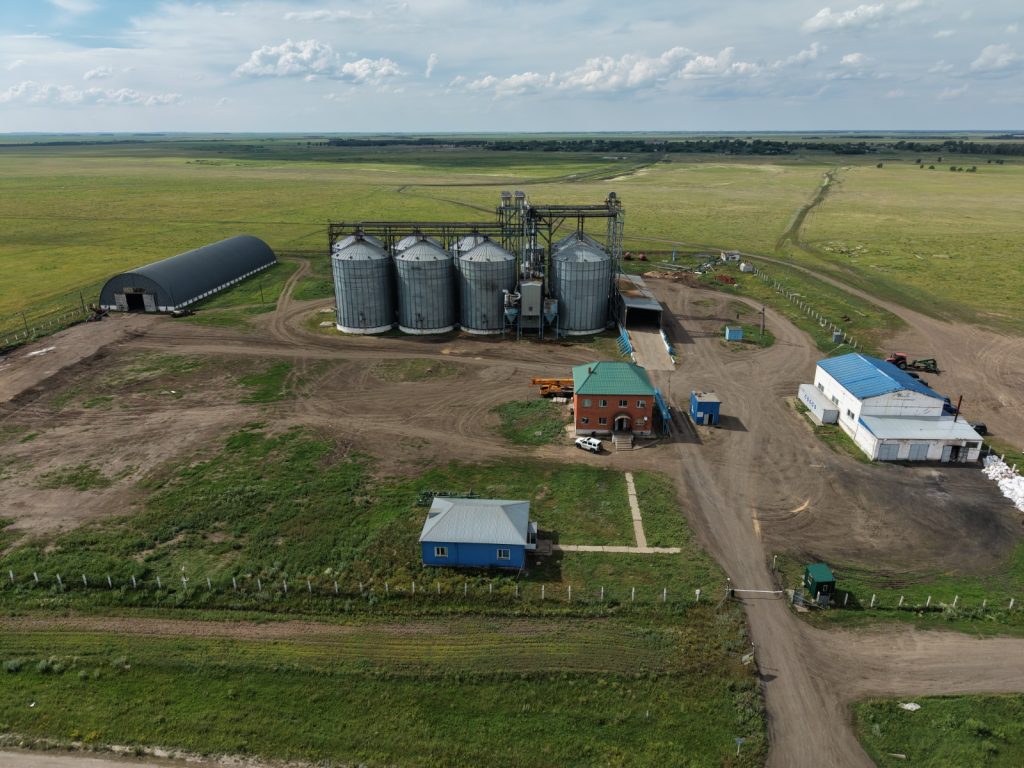
Kintal Islamov, Chairman of the Management Board of Atameken Agro JSC, spoke in an interview with *National Business Kazakhstan* about the current state and activities of the company he leads. He also shared his perspective on the future of Kazakhstan’s agro-industrial complex and its rural areas.
Atameken Agro is one of Kazakhstan’s largest agricultural companies—in fact, it ranks second in the country in terms of the amount of arable land it holds. NBK spoke with the company’s head about the business itself, the role of state support, the shortage of personnel, and what, in Kintal Islamov’s view, is currently lacking in rural areas.
One’s own efforts and state support
Kintal Kintalyevich, looking at your company’s profitability, it recorded a loss in 2023, followed by growth in 2024. Given such financial volatility, how profitable is the agricultural business in Kazakhstan, generally speaking?
— Such spikes can be expected roughly once every five years. They are caused by drought. We had a fairly severe drought in 2021, then conditions were good in 2022, and in 2023, things were terrible again. As for 2024–2026, everything seems fine so far—or, at the very least, nothing like what we saw in 2021 and 2023 has occurred.
Taking the agricultural business as a whole, while it may not be on par with the oil or mining sectors, it is certainly a viable endeavor—provided that all technical processes are followed and a solid material and technical infrastructure is in place. It should be noted, however, that this is a highly capital-intensive business; therefore, if you decide to enter it, you must do so thoroughly and ensure substantial, robust financing.
However, there is currently support from the government and the president, which plays a positive role. Loans have become more accessible, and interest rates are quite reasonable. I believe that if this continues for at least the next 10–20 years, the agricultural sector should become an attractive field.
Реально ли сейчас бизнесу из сферы АПК существовать без господдержки? И насколько для вашей компании именно такой формат поддержки важен?
— As I mentioned, the agricultural sector is capital-intensive, which naturally entails significant borrowing. If the cost of borrowing becomes too high, it will hinder the renewal of machinery and equipment, leading to a failure to follow proper technological processes—which, in turn, will result in low crop yields. Essentially, it would mean running in place. That is why the current state support is both very appropriate and very timely.
Your company has been around for over 20 years. How much of your own capital has been invested in its development during this time?
“Since 2019 alone, 61 billion tenge has been invested. And when you consider the preceding 15 years—with all their ups and downs—think of how much has been accomplished… When we first entered this sector, it was in a state of serious decline. There were no tractors, no combine harvesters, no grain elevators, and no facilities for receiving or processing agricultural produce. Everything had to be rebuilt from the ground up. On top of that, we lacked experience at the time.”
Your company’s securities are listed on KASE. How sound do you consider this decision to be, and how were the risks assessed when these securities were issued?
— They were issued in 2007 or 2008. At that time, we were facing certain financing challenges, and issuing securities on the KASE served as one of our sources of funding. It wasn’t cheap—and it still isn’t—but it was less expensive than bank financing. Moreover, it demonstrates our transparency to investors.
Are you satisfied with the current outcome, as it stands for 2026?
— Our situation is a case of a blessing in disguise. We had a loan with Cesnabank, which ran into difficulties. Our loan was transferred to the Problem Loans Fund and restructured over a 15-year period. This allowed us to improve our financial standing, and since 2019, our investments in the business have been steadily growing.


